
International Tea Day 2026
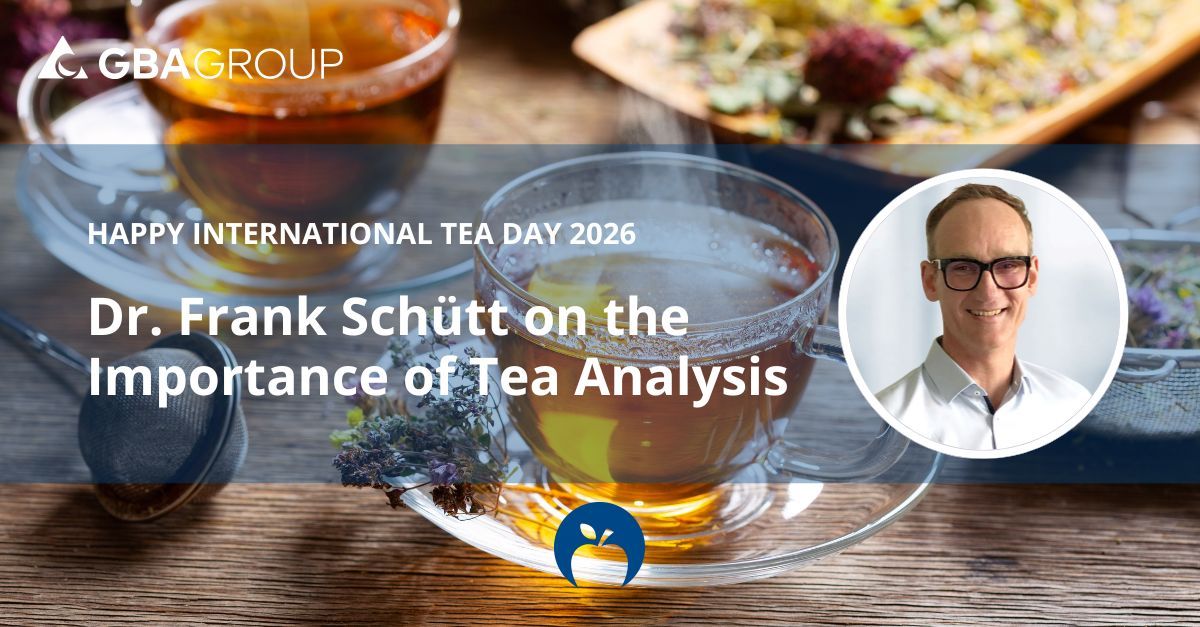
International Tea Day – What really lies behind a cup of tea?
Tea is one of the most popular beverages worldwide – aromatic, complex, and globally traded. Yet behind every cup lies a sophisticated analytical process that ensures product safety, quality and regulatory compliance.
On the occasion of International Tea Day, we spoke with Dr. Frank Schütt, tea analysis expert at GBA Group, about the role of laboratory testing in the tea industry.
What role does tea play from an analytical perspective in food testing?
Tea is an extremely interesting product from an analytical point of view. The diversity of tea varieties, growing regions and processing methods is also reflected in the laboratory analysis. It becomes even more complex when herbal and fruit infusions are included, as these introduce a wide range of natural compounds that must be considered during testing.
Why is tea testing important for quality and consumer protection?
Because of this diversity, tea may contain various substances relevant to quality and safety. These include residues of plant protection products, different contaminants, as well as naturally occurring plant compounds. Comprehensive laboratory analysis ensures that these substances are present only within permitted limits and that the product meets both regulatory requirements and consumer expectations.
Which parameters are typically analysed in tea?
Key analytical parameters include residues of pesticides as well as natural contaminants such as pyrrolizidine and tropane alkaloids, which may enter the harvest through wild plants. In addition, laboratories analyse heavy metals, mycotoxins, microbiological quality and relevant natural components.
What challenges exist in tea analysis compared to other foods?
Tea contains many natural plant compounds that can influence analytical methods, especially when substances are measured at trace levels. These compounds may interfere with measurements, making the analysis more complex than for some other foods. Modern analytical technologies and experienced experts are therefore essential for reliable results.
How does laboratory analysis help secure tea quality along the supply chain?
Tea and coffee are globally traded products whose quality and safety depend heavily on origin, cultivation conditions and processing. Analytical testing helps detect residues such as pesticides, process contaminants or heavy metals and verifies authenticity and product quality throughout the supply chain. This is particularly important as raw materials often originate from regions with varying agricultural standards.
What role do residue analyses play in international tea trade?
The tea trade is highly international, and legal regulations regarding pesticides and maximum residue limits differ significantly between countries. Residue analysis helps verify compliance with these requirements and ensures that tea products can be safely marketed in the respective markets, thereby supporting smooth global trade.
How can producers and traders ensure compliance with regulations?
The results of laboratory analyses are documented in a detailed test report. In addition to analytical results, the report includes a regulatory assessment indicating whether the tested sample complies with legal requirements and can be placed on the market. For companies, this forms an essential basis for quality assurance and risk management.
Which tea is particularly interesting from an analytical perspective?
Matcha tea plays a special role. Unlike traditional teas, where only the infusion is consumed, matcha involves drinking the entire powdered leaf. This means that residues or contaminants may be fully ingested, which requires particularly careful analytical evaluation.
And personally, which tea do you enjoy most?
“My personal favorite is a strong East Frisian tea blend – traditionally served with cream and sugar.”
If you have any questions or want to learn more about tea analysis, feel free to reach out to Dr. Frank Schütt at food@gba-group.de.
On International Tea Day, it’s worth remembering that behind every cup of tea stands not only centuries of tradition – but also modern science ensuring safety and quality.
At GBA Group, we support tea producers, traders and brands with matrix-specific laboratory analyses, modern analytical technologies and a global laboratory network – helping ensure safe, compliant and high-quality tea products across international supply chains.